Tattoo apparel is moving from ink culture to everyday graphic fashion

Tattoo apparel refers to clothing that draws on tattoo culture, tattoo flash, blackwork, fine-line illustration, lettering, symbolism, and artist-led graphic design. The appeal is not only visual impact. It lets shoppers wear the language of tattoos without making a permanent body decision, while giving tattooed consumers another way to carry their personal style into tees, hoodies, jackets, mesh tops, and accessories. Public data helps explain why the look now feels more familiar: Pew Research Center reported in August 2023 that 32% of U.S. adults had at least one tattoo, including 22% who had more than one. That does not mean every shopper wants tattoo-print clothing, but it does show why ink-inspired imagery is now read as a broader cultural language rather than a narrow subculture signal.
For more coverage of fashion categories and product ideas, visit the apparel products section.

What tattoo apparel means now
In the narrowest sense, tattoo apparel can mean T-shirts and hoodies sold by tattoo studios, artists, or alternative clothing brands. In a wider fashion sense, it includes any garment that uses tattoo-inspired artwork as its main design language. That could be a traditional flash eagle on a heavyweight tee, a fine-line floral motif on a fitted mesh top, a back-piece composition printed across a jacket, or gothic lettering embroidered onto workwear.
The category is easy to misread because the word tattoo can point to several different products or contexts. It may refer to actual body art, temporary tattoos, tattoo studio uniforms, or clothing made for tattoo artists to wear while working. In search behavior, however, tattoo apparel usually signals a style interest: shoppers are looking for garments with ink-inspired graphics, alternative identity, artist energy, or streetwear styling.
The strongest tattoo apparel does more than place a skull or rose on fabric. It borrows from the reasons tattoo imagery works on skin: strong line hierarchy, symbolic compression, controlled negative space, and artwork that can be read from a distance while still holding detail up close. When those principles are translated carefully into clothing, the garment feels designed rather than simply decorated.
Why tattoo apparel has wider fashion appeal
Tattoo apparel is easier for mainstream shoppers to understand because tattoos themselves are more visible across age groups, workplaces, sports, entertainment, and social media. Pew Research Center’s 2023 analysis also found that a large majority of Americans believed society had become more accepting of people with tattoos over the previous 20 years. That wider acceptance gives apparel brands more cultural room to use tattoo-inspired graphics without positioning every product as underground or niche.
There is also a practical reason for the category’s growth. A tattoo is permanent, personal, and often expensive. A garment is reversible. Shoppers can try a back-piece graphic, devotional symbol, blackletter typography, or full-sleeve illusion print without committing to the image for life. That makes tattoo apparel useful for people who like the attitude of ink culture but do not want, cannot have, or are not ready for a tattoo.
The broader fashion market matters as well. The Business of Fashion and McKinsey’s State of Fashion 2026 report described a challenging industry climate in which brands face cautious consumers and pressure to offer clearer value. For tattoo apparel, novelty alone is unlikely to be enough. The products with staying power are more likely to combine stronger artwork, clear artist credit, durable printing, and silhouettes that can be worn beyond a single trend cycle.
The visual codes that make tattoo apparel recognizable
Tattoo apparel is not one fixed look. It draws from several tattoo traditions, each with its own graphic rules. Understanding those codes helps explain why some garments feel credible while others feel generic.
| Visual source | Common apparel use | What can go wrong |
|---|---|---|
| Traditional flash | Bold tees, souvenir-style jackets, bowling shirts, patches | Overusing roses, daggers, and skulls without fresh composition |
| Blackwork | Oversized hoodies, monochrome sets, long-sleeve prints | Losing detail when the print scale is too small or the fabric is too textured |
| Fine-line illustration | Fitted tops, minimal tees, soft layering pieces | Thin lines fading quickly or disappearing on dark fabrics |
| Japanese-inspired motifs | Jackets, camp shirts, full-back compositions | Using cultural symbols without context or reducing complex traditions to decoration |
| Lettering and blackletter | Chest graphics, sleeve prints, waistbands, caps | Poor readability, cliché phrases, or type that looks copied rather than drawn |
| Tribal, cyber-tribal, and abstract linework | Body-mapped mesh, activewear-inspired tops, clubwear | Confusing trend revival with respectful design research |
The most effective pieces often borrow tattoo composition, not just tattoo symbols. A back print, for example, can be arranged like a back piece, with a central figure, supporting elements, and movement that follows the body. A sleeve print can echo the rhythm of a tattoo sleeve by wrapping around the arm instead of sitting as a flat rectangle. A chest print can use the same balance tattooers consider when placing designs across the sternum or collarbone.
Product and print choices separate sharp design from costume
Tattoo apparel depends heavily on execution. A strong illustration can still fail if the blank garment feels flimsy, the print cracks quickly, or the design is placed without regard for the body. Because tattoo imagery is often line-heavy, print clarity is especially important.
Garment weight and silhouette
Heavyweight cotton tees and fleece hoodies work well for bold flash, blackwork, and large back graphics because they provide enough structure for the artwork to sit cleanly. Lighter jersey can work for fine-line pieces, but it needs careful testing because stretch can distort delicate linework. Mesh, rib, and sheer fabrics can be effective for tattoo-sleeve or body-map effects, although they move the category closer to fashion styling than classic streetwear.
Silhouette changes the message. An oversized tee makes the graphic feel more like streetwear. A cropped tee pushes it toward youth fashion. A boxy work jacket turns tattoo art into a patch, club, or shop-uniform reference. A camp-collar shirt can make the same design feel like vintage resort wear with an edge.
Print method and durability
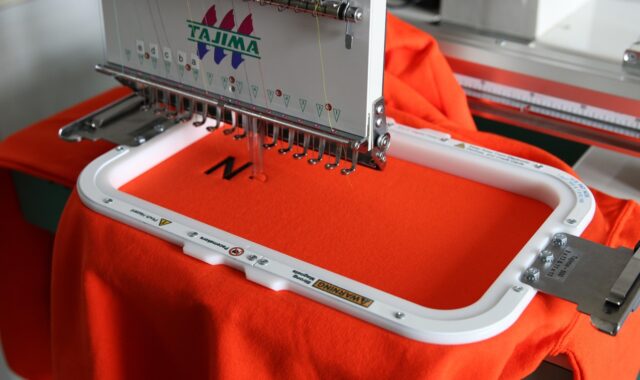
Screen printing remains a strong option for bold graphic apparel because it can deliver solid color and high opacity at scale. Direct-to-garment printing offers more flexibility for complex images and shorter runs, but the result depends heavily on fabric, pretreatment, and curing. Embroidery can make lettering, small symbols, and patches feel more premium, but it is not suited to every illustration because stitches simplify curves and fine detail.
For tattoo apparel, durability is part of credibility. If a design is meant to imitate permanent ink, a print that fades after a few washes weakens the concept. Brands and buyers should review line sharpness, opacity, hand feel, wash testing, and whether the print placement still works when the garment is worn rather than photographed flat.
Licensing, labeling and trust issues brands should not ignore
Tattoo apparel can create legal and ethical questions because tattoo-style art is still art. The U.S. Copyright Office explains that visual works such as graphic art and illustrations can be protected by copyright when they meet the legal requirements. It also explains that clothing is generally treated as a useful article, while separable pictorial, graphic, or sculptural elements on that clothing may be protected. In practical terms, the graphic on a shirt can raise rights issues even if the shirt itself is a functional garment.
For brands, the safest route is straightforward: commission original artwork, use written agreements, define whether the work is assigned or licensed, specify apparel uses, and credit the artist when appropriate. Copying a tattoo from a person’s body, lifting flash from a studio wall, or using an online tattoo image as a print reference can create avoidable risk. It can also damage trust with the tattoo community, where authorship and style lineage matter. See also: care tips.
Labeling is another trust issue. The Federal Trade Commission’s business guidance says most textile and wool products sold in the United States need labels that identify fiber content, country of origin, and the manufacturer or another responsible business. FTC guidance also treats unqualified Made in USA claims as claims that should be supported by evidence that the product is all or virtually all made in the United States. Tattoo apparel brands using origin, cotton, sustainability, or artist-collaboration claims should keep those claims specific and supportable.
None of this excludes small labels from the category. It means the stronger product story is not only about rebellion or attitude. It is also about traceable artwork, accurate labeling, and respect for the culture that made the imagery valuable in the first place.
How to style tattoo apparel without losing the artwork
Tattoo apparel usually works best when the rest of the outfit gives the artwork room to breathe. A full-front graphic tee can sit well with straight denim, black trousers, or a plain overshirt. A back-print jacket is strongest when it is the outer layer and the rest of the outfit stays quieter. A fine-line mesh top can be layered under a vest, slip dress, or open shirt so the body-map effect remains visible.
Color discipline helps. Traditional tattoo graphics often use black, red, green, yellow, and cream. Those colors pair naturally with washed black denim, raw indigo, olive workwear, leather, canvas, and silver-tone jewelry. Blackwork pieces often work best in monochrome outfits where texture replaces color. Fine-line and gothic lettering styles can feel more elevated when paired with tailored trousers or cleaner footwear rather than only distressed pieces.
For shoppers, the key question is not whether a piece looks bold on a product page. It is whether the artwork still makes sense in a real wardrobe. Before buying, consider these checks:
- Is the main graphic placed where it will remain visible when layered?
- Does the garment fit the mood of the artwork?
- Can the print survive normal washing without losing the linework?
- Is the artwork original, credited, or clearly licensed?
- Does the piece work with at least three items already in the wardrobe?
For broader apparel product context and category updates, the apparel products archive can be a useful starting point.
What the category may look like next
The next phase of tattoo apparel is likely to be more selective. Basic skull tees and generic flash prints will continue to exist, but stronger products will compete on authorship, garment quality, and placement. Artist collaborations can give the category credibility when they are transparent. Better blanks can make the graphics wearable beyond one season. More thoughtful cultural research can reduce the risk of turning meaningful symbols into shallow decoration.
The category also has limits. Tattoo imagery can become visually crowded, and not every symbol belongs on mass-market clothing. Some shoppers want subtle identity rather than full alternative styling. Others may prefer one high-impact piece over a full tattoo-inspired wardrobe. That makes editing important: the best tattoo apparel collections often leave space between graphics and avoid making every garment shout at the same volume.
For fashion observers, tattoo apparel is useful because it shows how body culture, streetwear, art licensing, and product quality now overlap. For buyers, it offers a flexible way to participate in ink culture without permanence. For brands, it is a reminder that a strong graphic is not just an image. It is also a rights question, a production challenge, a styling decision, and a cultural signal.
Frequently asked questions
What is tattoo apparel?
Tattoo apparel is clothing that uses tattoo-inspired artwork, symbols, composition, or lettering as a central design feature. It may include graphic tees, hoodies, jackets, mesh tops, camp shirts, and other garments influenced by tattoo flash, blackwork, fine-line art, or studio culture.
Is tattoo apparel only for people who have tattoos?
No. Tattoo apparel can appeal to both tattooed and non-tattooed shoppers. For people without tattoos, it offers a non-permanent way to explore ink-inspired style. For people with tattoos, it can extend their personal visual identity into clothing.
What makes tattoo apparel look premium?
Premium tattoo apparel usually has original or licensed artwork, clean line reproduction, durable printing, a garment weight that suits the design, and thoughtful placement. Artist credit, accurate labeling, and restrained collection editing can also make the product feel more credible.
Can tattoo designs be used freely on clothing?
Not automatically. Original tattoo-style artwork may be protected as visual art, and apparel graphics can raise copyright and licensing questions. Brands should commission original work, secure clear written rights, and avoid copying designs from tattoo artists, clients, or online images without permission.
How should tattoo apparel be cared for?
Care depends on the fabric and print method, but graphic garments generally last longer when washed inside out, cleaned in cold water, and dried with low heat or air drying. Following the garment’s care label is the most reliable rule.