Motorcycle helmet buying guide for safer fit and everyday riding

Quick answer: buy by standard, coverage, and fit before style
A useful motorcycle helmet buying guide starts with three decisions: confirm the safety standard required where you ride, choose a shell style with the coverage your riding calls for, and then spend real time checking fit. Color, graphics, shell material, vents, and communication cutouts all matter, but they should come after those basics. In the United States, the key shopping screen is a DOT label showing compliance with Federal Motor Vehicle Safety Standard No. 218. In markets that use UN ECE approval, riders should check the correct ECE label for their jurisdiction. NHTSA also reminds riders that DOT is a manufacturer self-certification system, not a pre-approval issued by the agency. (nhtsa.gov)
The practical takeaway is simple: do not buy the helmet that only looks right in a mirror. Buy the one that is certified for your road use, covers the head and face areas you want protected, stays secure when fastened, and remains comfortable for at least 30 to 45 minutes before the first ride. NHTSA specifically recommends that post-purchase pressure-point check because hot spots may not appear immediately. (nhtsa.gov)
Safety labels and standards to check first
For U.S. road use, look at the rear outside of the helmet for the DOT certification label. A compliant current label should identify the manufacturer or brand, the model designation, DOT, FMVSS No. 218, and CERTIFIED. The regulation also requires separate permanent labeling with details such as manufacturer name, size, month and year of manufacture, construction materials, and safety instructions. That information gives you more to verify than a helmet that relies only on broad marketing claims. (nhtsa.gov)
It is also important to understand what DOT does and does not mean. NHTSA says helmets sold in the United States are required to meet the federal standard, but the agency does not approve individual models before sale. Manufacturers certify compliance, and NHTSA may test helmets and require recalls if a model fails. In practice, the label is a minimum screen, not a substitute for buying from a reputable retailer and inspecting the helmet carefully. (nhtsa.gov)
Riders comparing international labels will often see ECE 22.06, ECE 22.05, Snell M2025D, or Snell M2025R. The UK government lists UNECE Regulation 22.05 and 22.06 among accepted motorcycle helmet safety standards for UK road use. The Snell Foundation introduced separate M2025D and M2025R motorcycle helmet standards that took effect on August 1, 2024. Snell says M2025D is aimed mainly at helmets that also meet DOT or JIS requirements, while M2025R is intended for helmets that also need to meet ECE R22-06. (gov.uk)
| Label or scheme | What it tells a buyer | How to use it when shopping |
|---|---|---|
| DOT / FMVSS No. 218 | U.S. minimum federal motorcycle helmet performance standard and certification label | Essential first check for U.S. street riding and many riding courses |
| ECE 22.06 | UN ECE motorcycle helmet approval used in many non-U.S. markets | Useful if you ride where ECE approval is accepted or if the same model is sold in ECE markets |
| Snell M2025D or M2025R | Voluntary certification from the Snell Foundation, with M2025 versions including oblique impact tests | Helpful for riders who want an additional certification or need a track-day accepted label |
| SHARP rating | UK Department for Transport consumer rating comparing tested helmets | Useful for model research, but still secondary to legal approval and personal fit |
Choose the helmet type for the way you ride
Helmet shape and coverage should match the riding environment. A highway commuter, a scooter rider in town, a touring rider who wants a flip-up chin bar, and an off-road rider using goggles do not need the same shell design. The common mistake is treating helmet type as a style category only. It is really a decision about coverage, airflow, visibility, noise, and convenience.
- Full-face helmet: Offers a fixed chin bar and integrated face shield. It is usually the easiest starting point for riders who want maximum face coverage in one package.
- Modular helmet: Uses a flip-up chin bar for convenience at stops. Check that the helmet is certified for how you plan to use it, and do not assume every modular helmet is designed to be ridden with the chin bar open.
- Dual-sport helmet: Blends street and off-road features, often with a peak, larger eye port, and shield or goggle compatibility. It suits adventure riding, but the peak may create more wind drag at highway speed.
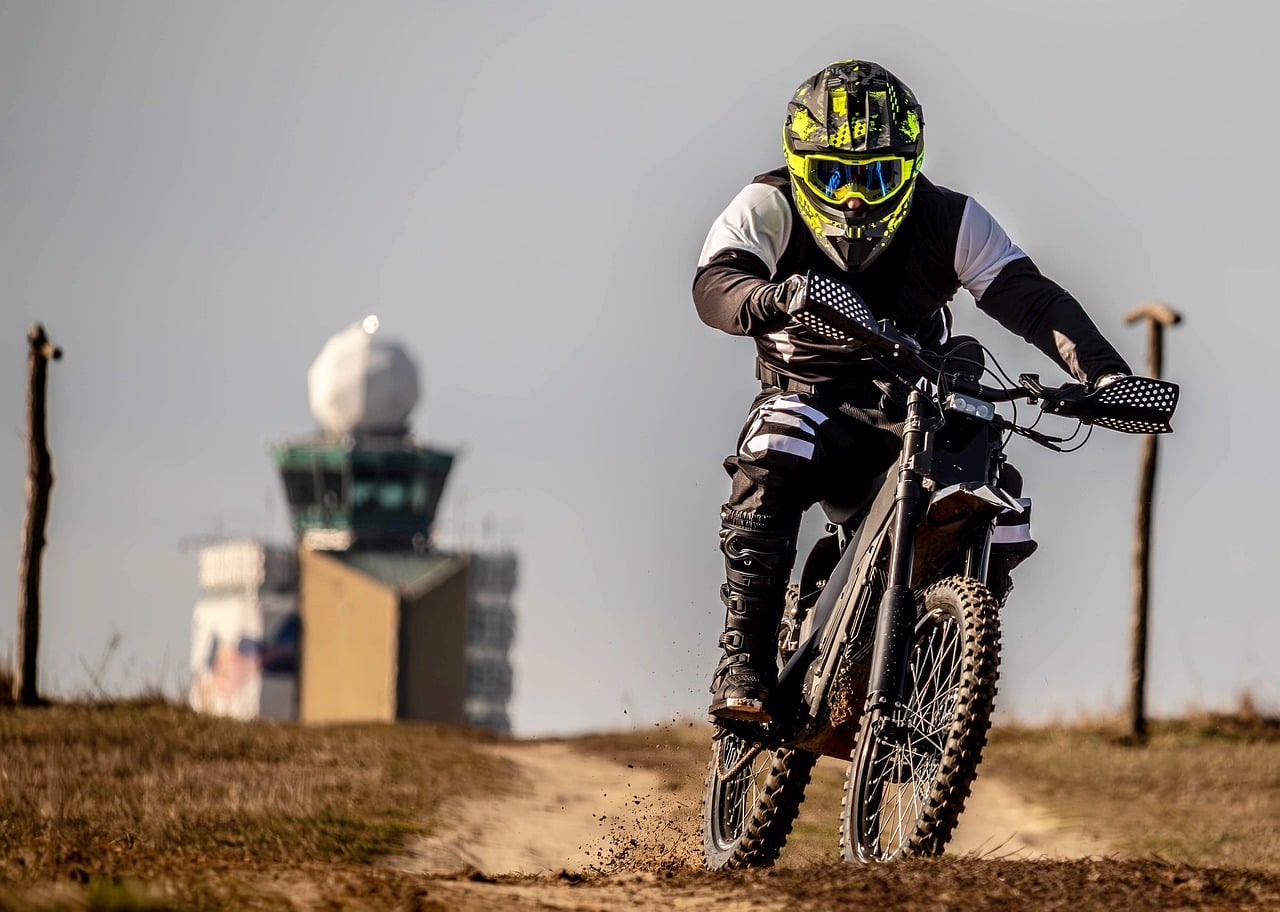
- Off-road helmet: Usually has an extended chin bar and peak, with goggles required. It prioritizes airflow and dirt riding over street noise control.
- Open-face or half helmet: Provides less face coverage. NHTSA notes that half and open-face designs provide only some protection and do not include a chin guard, which increases safety risk. (nhtsa.gov)
For many everyday riders, full-face or modular designs give the best balance of weather protection, eye protection, and daily usability. That does not make every full-face helmet automatically better than every other helmet. Fit, certification, retention, and construction still matter. If you are unsure, start your fitting session with full-face helmets, then compare modular or dual-sport models only if your riding needs justify the trade-offs.
Fit is the real buying decision
A helmet can carry respected labels and still be the wrong purchase if it does not fit your head. NHTSA groups head shapes into round oval, intermediate oval, and long oval, and recommends focusing on head shape rather than face shape. Before choosing a size, measure around the head with a cloth tape just above the eyebrows and around the thickest point at the rear, then compare that measurement with the specific brand size chart. (nhtsa.gov)
Once the helmet is on, it should feel evenly snug around the crown and tight in the cheeks without sharp pain. It should not rotate freely or slide when you shake your head. NHTSA notes that forehead pressure can indicate a helmet that is too round, while pressure on the sides can indicate a helmet that is too oval for your head. This is why two helmets in the same size can feel completely different. (nhtsa.gov)
Use this fit test before removing the tags:
- Fasten the chin strap correctly and tighten it until secure, not merely clipped.
- Hold the chin bar or lower edge and try to move the helmet side to side and up and down. Your skin should move with the liner.
- Check that the eye port sits correctly and that the helmet does not block normal forward vision.
- Wear it indoors for 30 to 45 minutes to reveal pressure points.
- If the brand offers cheek pads or liners in different thicknesses, adjust only with approved replacement parts. Avoid cutting foam or modifying the liner.
This is where online buying becomes harder. If you already know a brand and internal shape that fits you, online comparison can work. If this is your first helmet, or your head shape has never been matched properly, trying several models in person is often worth more than a discount.
Comfort and style features that matter after safety
After certification and fit, comfort determines whether you actually wear the helmet correctly on every ride. Ventilation matters in hot weather, but large vents can also affect noise. A good shield system should seal cleanly, resist fogging with the correct insert or treatment, and be easy to replace. If you ride at night, avoid using a dark tinted shield after sunset; carry a clear shield or use a legal internal sun visor if your helmet has one.
Weight is another common shopping filter, but it should be judged in context. A lighter helmet can reduce fatigue on long rides, yet balance and fit can matter as much as the number on a scale. A helmet that is light but unstable in crosswinds or painful at the forehead is not a better purchase. Materials such as polycarbonate, fiberglass composite, and carbon fiber can all appear in certified helmets, so do not treat material alone as a safety ranking.
Style still has a role. A helmet is part of your riding identity and your visible gear, especially on a fashion-focused site such as Haoshangdai. Choose graphics, color, and finish you enjoy, but give visibility a serious place in the decision. NHTSA lists high-visibility helmet options as a way to significantly increase a rider’s ability to be seen, and bright or reflective details can be especially useful for commuters. (nhtsa.gov) See also: care tips.
If you want more practical style-and-function decision guides, visit our buying guides section.
Price, lifespan, and red flags
A higher price can buy lighter materials, quieter aerodynamics, premium liners, better vent controls, smoother shield hardware, higher paint quality, and integrated communication features. It does not automatically prove better crash protection. The UK SHARP program exists partly because, according to the Department for Transport scheme, helmets that meet minimum legal standards can still perform differently in impact testing. SHARP tests each rated model with 30 linear and 2 oblique impact tests and expresses results as a 1 to 5 star rating. (sharp.dft.gov.uk)
For replacement timing, start with two rules. First, replace a helmet after a serious impact or crash, even if the outer shell looks acceptable. FMVSS labeling instructions state that if a helmet experiences a severe blow, the rider should return it to the manufacturer for inspection or destroy and replace it. Second, check the manufacturer’s recommendation for age replacement. The Snell Foundation says it recommends helmet replacement after five years of normal use because of wear, material changes, and advances in design. (law.cornell.edu)
Be especially careful with novelty helmets and unusually thin designs. NHTSA warns that novelty helmets do not meet safety standards and should not be worn on a motorcycle. Red flags include a shell less than 1 inch thick, lack of a stiff foam inner liner, weak plastic buckles, unusually low weight around a pound, fake DOT labels, and rigid decorative projections. The federal regulation also limits rigid external projections to those needed for essential accessories and restricts how far they may protrude. (nhtsa.gov)
A practical buying checklist
Use this checklist when comparing helmets in a store or before ordering online:
- Confirm the legal safety label required where you ride.
- Check the manufacturer, model, size, and production date labels.
- Choose the helmet type based on coverage and riding environment, not graphics first.
- Measure your head and test multiple internal shapes, not just multiple sizes.
- Wear the helmet for 30 to 45 minutes before committing.
- Fasten the retention system and make sure the helmet cannot roll off or shift easily.
- Inspect shield clarity, seal, detents, replacement availability, and fog-control options.
- Check whether the helmet works with your glasses, earplugs, or communication system.
- Avoid used helmets unless you can fully verify age, impact history, and authenticity.
- Do not modify the EPS liner, drill the shell, or add rigid decorative parts.
The strongest purchase is rarely the most dramatic-looking helmet on the shelf. It is the helmet that meets the right standard, fits your head shape, gives the coverage your riding deserves, and remains comfortable enough that you will wear it fully fastened every time.
Frequently asked questions
Is a DOT helmet enough for everyday riding?
DOT / FMVSS No. 218 is the minimum federal safety standard for motorcycle helmets sold for U.S. road use. It is the first label U.S. riders should check, but it should not be the only buying factor. Fit, retention, coverage, construction quality, and a reputable retail source still matter because NHTSA describes DOT as a manufacturer self-certification system rather than agency pre-approval. (nhtsa.gov)
Is ECE 22.06 better than DOT?
They are different standards used in different regulatory systems, so a simple better-or-worse answer can be misleading. ECE 22.06 is important in many non-U.S. markets and is often discussed because of its updated test approach, while DOT remains the key U.S. road-use label. If a helmet has both labels and fits properly, that can be reassuring, but do not buy a poorly fitting helmet just to chase an extra sticker.
Should I buy a used motorcycle helmet?
Usually, a new helmet from a reputable seller is the safer choice. With a used helmet, you may not know whether it has been dropped hard, crashed, stored in heat, exposed to chemicals, or modified. If you cannot verify age, authenticity, and impact history, treat the savings as a false economy.
How tight should a new helmet feel?
It should feel snug and even, with firm cheek contact and no free movement when you shake your head. It should not create sharp pressure on the forehead, temples, or sides of the skull. A little cheek compression is normal; pain, numbness, or strong pressure points are not.
When should I replace my motorcycle helmet?
Replace it after a serious impact or crash, and follow the manufacturer’s age recommendation. Snell recommends replacing helmets after five years of normal use, while U.S. labeling instructions for FMVSS-compliant helmets warn that a helmet that experiences a severe blow should be inspected by the manufacturer or destroyed and replaced. (law.cornell.edu)